
7 Odoo Features That Will Accelerate Your Business Growth
Odoo ERP is one of the fastest growing platforms in the world right now, and it is not hard to see why. Millions of businesses use it to automate their processes, save time, and scale without adding extra headcount just to keep operations running. In fact, most organizations today rely on some form of ERP system because the productivity gains are simply too big to ignore, and Odoo has positioned itself as one of the most flexible options on the market.
What makes Odoo different from a lot of other ERP platforms is that it does not force you to buy a massive, rigid system all at once. You can start small, with just the modules your business actually needs, and expand as you grow. This approach has made it especially popular with small and mid sized businesses that want enterprise level capabilities without the enterprise level complexity or price tag.
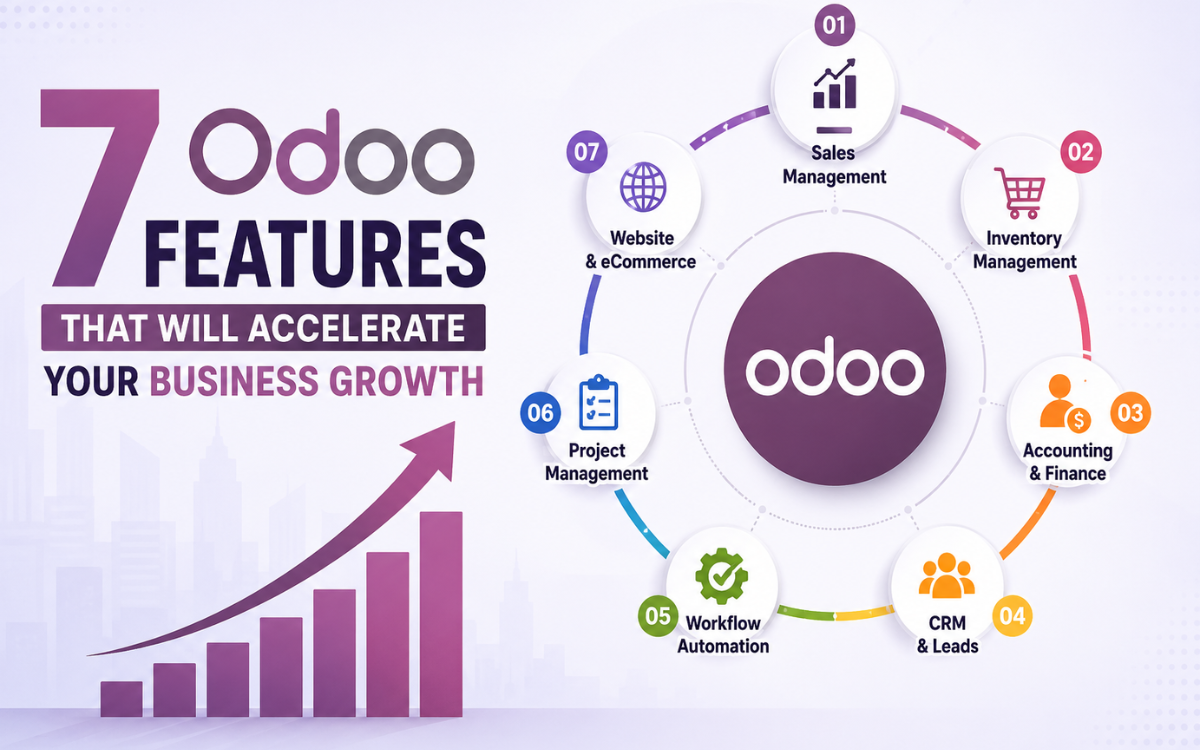
Growth happens at the speed of information. When decision makers are working off outdated reports or scattered spreadsheets, momentum slows down and opportunities get missed. Below are seven Odoo features that consistently help businesses work smarter, grow faster, and stay ahead of the competition.
One dashboard for every department
Odoo’s dashboard brings together real time business metrics from every department, including sales, finance, inventory, projects, and customer support, into one clean and customizable interface. Instead of jumping between five different tools just to understand how the business is performing, your team gets a single source of truth. You can build tailored views based on the exact numbers your team cares about, which means faster decisions and less time spent chasing information.
This matters more than it might seem at first. In a lot of growing businesses, the sales team is looking at one set of numbers, finance is looking at another, and operations has its own version of the truth. When everyone works from the same dashboard, disagreements about what the data actually says tend to disappear, and meetings become about deciding what to do next rather than arguing about whose numbers are correct.
Smarter inventory controls
Automated inventory controls reduce stock discrepancies, cut down on human error, and help you maintain the right safety stock levels without constant guesswork. For example, a growing online store using Odoo can set up automatic purchase orders that trigger the moment stock hits a certain threshold, so best selling products never run out. This kind of automation saves hours of manual checking every week and prevents costly stockouts.
Beyond just reordering stock, Odoo also gives you visibility into which products are moving quickly, which are sitting too long, and where your money is actually tied up. For businesses that sell across multiple warehouses or locations, this becomes even more valuable, since you can see the full picture instead of managing each location as its own isolated operation.
Sales and CRM in one connected workflow
Odoo turns lead generation, opportunity tracking, and customer management into one seamless workflow instead of forcing your sales team to juggle separate apps. From the moment a lead is captured all the way through to closing the deal and generating the invoice, everything stays connected inside Odoo CRM. Sales teams spend less time switching between tools and more time actually closing deals, and because the data lives in one place, revenue forecasts become far more accurate.
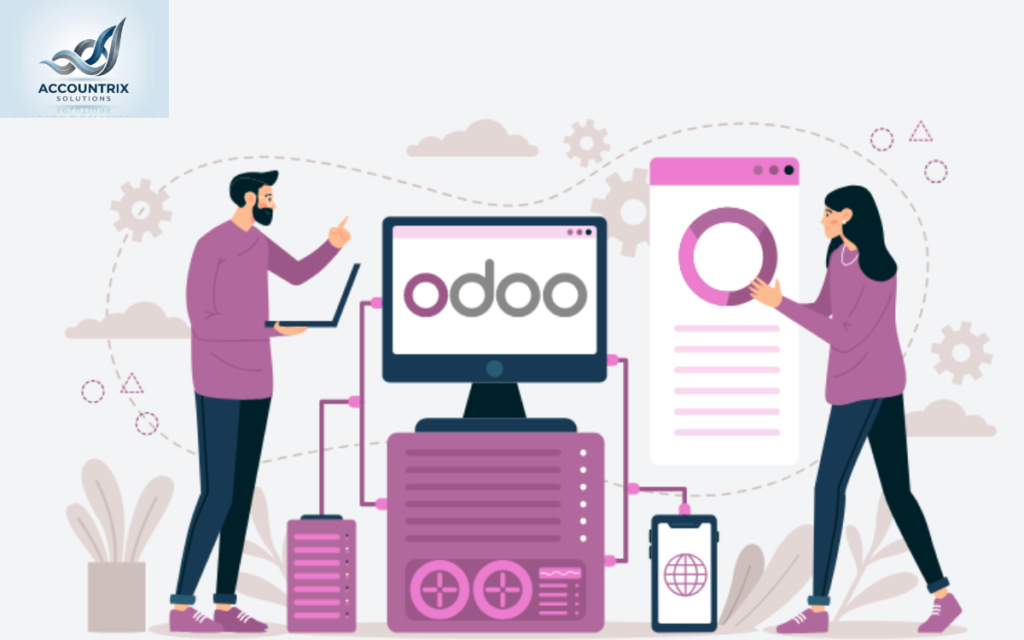
This connected approach also helps with accountability. Managers can see exactly where each deal stands, how long it has been sitting in a particular stage, and which team members need support. Instead of relying on end of week status updates, everyone can see the pipeline in real time, which usually leads to faster follow ups and fewer deals slipping through the cracks.
Centralized financial management
As companies scale, financial complexity naturally increases, but that does not mean your accounting processes need to become chaotic. Odoo’s financial management tools centralize accounting, tax compliance, expense tracking, and reporting in a single system, so your books stay accurate and easy to review at any point. If your business needs help getting this set up correctly from the start, our Odoo implementation services are built exactly for this kind of work.
Having finance connected to the rest of the business, rather than sitting in a separate system, also means fewer reconciliation headaches at month end. Sales, inventory, and expenses all feed directly into your financial reports, so you are not stuck manually matching numbers across three or four different tools before you can trust your own reporting.
Automation that removes repetitive work
A large part of what makes Odoo valuable is how much manual, repetitive work it takes off your team’s plate. Automated invoicing, payment reminders, approval workflows, and routine data entry all run in the background instead of eating up staff time. This does not just save hours, it also reduces the small human errors that tend to creep into manual processes over time.
Over time, these small automations add up to a meaningful difference. An employee who used to spend an hour a day chasing overdue invoices or manually entering data can instead spend that time on higher value work, like following up with clients or improving internal processes. For a growing business, that shift in where time gets spent can be the difference between staying reactive and actually getting ahead.
HR tools that simplify people management
Odoo’s HR module handles recruitment, payroll, attendance, and performance evaluations from one place, which makes managing a growing team far less stressful. Instead of relying on spreadsheets or disconnected tools, HR teams get a centralized system that keeps employee records, approvals, and reporting consistent across the business.
As headcount grows, this consistency becomes especially important. Onboarding new employees, tracking leave requests, and running performance reviews all follow the same structured process, which reduces confusion and makes it much easier to stay compliant with company policy as the team scales.
Flexible customization for your business
Every business runs a little differently, and Odoo is built to reflect that instead of forcing you into a rigid structure. Custom dashboards, industry specific modules, and integrations with tools like payment gateways or marketing platforms all help the system match how your business actually operates. This is where Odoo customization services make the biggest difference, since off the shelf setups rarely fit every business perfectly.
Whether it is a manufacturing company that needs a specific production workflow, or a services business that needs custom reporting for client billing, Odoo’s flexibility means the system can be shaped around your processes rather than the other way around. This is often the deciding factor for businesses that tried a more rigid ERP system in the past and found themselves fighting the software instead of benefiting from it.
Getting the most out of Odoo
Odoo has a lot of moving parts, and the businesses that see the best results are usually the ones that plan their setup properly instead of trying to fix issues after going live. A rushed implementation can leave gaps that cause problems months down the line, while a well planned one sets the business up to actually use the system to its full potential from day one.
If you are exploring Odoo for your business or want to make sure you are using it to its full potential, the team at Accountrix Solutions can help you figure out which features matter most for your operations and get everything running the way it should. Whether you are just getting started or looking to get more value out of a system you already have in place, the right guidance can make all the difference between an ERP system that sits underused and one that genuinely accelerates your growth.




Leave a comment